
Yesterday The Age ran a story about cuts to Museums Victoria. 55 jobs will be axed, entry prices raised, and technology updates shelved. The chief executive apparently told staff to ‘find someone to hug.’
I was a Research Associate at Museums Victoria for six years—one of many institutions I’ve been associated with since I left the corporate sector and started working in the humanities nearly 18 years ago. As I approach that milestone I look back on years of interesting, rewarding work and many wonderful colleagues and friends; but I also see a landscape of continued restructures, increasing precarity, and escalating funding cuts.
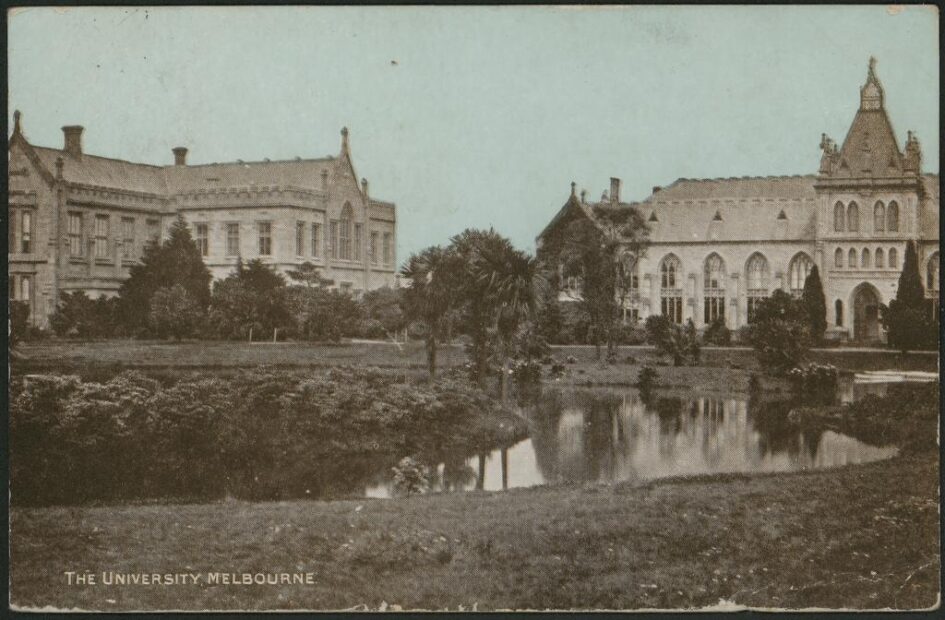
My university career started in 2008 at the University of Melbourne’s eScholarship Research Centre (ESRC). I was a casual archivist working on collections and finding aids related to the history of science, due for deposit with the State Library of Victoria. Within a few years I was helping to run national projects, managing ARC grants, presenting at conferences, and writing scholarly articles.
When the University of Melbourne went through a so-called Business Improvement Process (or BIP, one of the many weasely euphemisms I’ve seen over the years when universities cut jobs) the ESRC was one of just a few areas that seemed to benefit, gaining a number of funded permanent positions. I became a continuing professional staff member before leaving the Centre in late 2014 to work on my PhD.
By 2020, the ESRC was gone. People, skills, knowledge and projects dating back 35 years were not seen as worth retaining by university management. Perversely, it seems likely the additional funding received during BIP may have contributed to the Centre’s demise. When I started we were largely self-funded; but several continuing positions made us a budget line. That put us on the radar—a dangerous place to be in the modern university.
Restructures and strategic redundancies are not inherently problematic. Sometimes structures need to be changed, processes streamlined, and costs cut; and sometimes positions actually become redundant, rather than the language of redundancy being used to mask people being sacked and their work redistributed to over-worked colleagues. But when these things happen without vision, strategy, empathy and care these processes degrade institutions and damage people. One of my former ESRC colleagues committed suicide during the ‘change process’ that disestablished the Centre. The way they were treated was not the only factor, but many believe it was a contributing one. A hug isn’t going to fix the feeling that your whole working life has been reduced to a number on a spreadsheet or your work doesn’t have value. The feeling that you are dispensable.
After the act, the legacy of such places is also treated as redundant. Five years on the ESRC’s website is no longer online, and its outputs—including many substantial digital public history projects funded by public money—can be hard to find, even for those who know what to look for.
I worked on my history PhD from 2014–2019, co-supervised by staff at the University of Melbourne and Museums Victoria. During this time the museum got a new CEO. Restructures and cost-cutting followed. Many staff lost their jobs, including one of my PhD supervisors who was ‘moved on’ with little notice.
After my PhD I started a postdoc at ANU. When I joined the university I found it welcoming, collegial, and often inspiring. Now the place is being gutted. I then spent two years at University of Tasmania, which is currently going through its own round of restructures and redundancies; and now I do some casual teaching at UniSA, which is merging with University of Adelaide to become Adelaide University.
Today I have active email addresses for ANU, UTas, and UniSA, and receive regular change proposals and implementation plans to all three. When I talk to colleagues and friends in the university sector the conversation inevitably turns to how they are coping as the sector-wide change processes grind on.
I continue to believe in the value of humanities scholarship in universities, and more broadly. But, apart from some casual teaching, I no longer work in the university sector. After two unsuccessful DECRA applications (which is a whole different story…), and two postdocs, I now spend most of my time as a freelance historian and archivist.
Not that long ago I told several people I wanted a continuing position before I turned 50. Now that landmark birthday is only a year away, and the dream has changed. Given the state of the sector—magnified by rolling issues like the Jobs Ready Graduate Package, changing policies around international students, and a broken research funding system—I currently feel more secure as a freelancer based mostly outside the academy, and am finding ways to keep doing work I think is important.
Maybe I’m coming of age; or maybe I just feel in control rather than at the mercy of overpaid VCs and Nous consultants. Thinking back over everything I’ve seen, that makes me one of the lucky ones.
1 Pingback